Birthdays: Childhood Edition!
Welcome to The World Culture Hub Birthdays: Childhood Edition!
Birthdays are a universal milestone, but the ways we celebrate another year around the sun are as beautifully diverse as the planet itself. From pulling ears for good luck to eating long noodles for a lengthy life, every culture brings its own unique magic, history, and tradition to the party.
Select a country below to explore the fascinating histories behind global birthday traditions, uncover surprising cultural secrets, and download our exclusive, culturally inspired digital birthday greeting cards!
A birthday card collection was created for all of these countries and you can view them on my GIPHY Account. Please feel free to send them to your family and friends and share this link with them too.
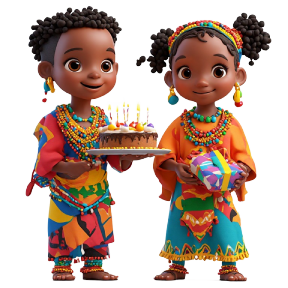
Africa (Kwanzaa)
How They Celebrate (History): Created in 1966, Kwanzaa is a beautiful week-long cultural holiday celebrated predominantly in the United States and the Americas to honor African agricultural harvest history, family, and community values.
Did You Know?: The celebration centers around a special wooden candle holder called a Kinara, which holds seven candles representing the Nguzo Saba (The Seven Principles of black community development and unity).
Fun Fact: On the final night of Kwanzaa, families host a massive celebratory feast called the Karamu, where children receive educational or artistic gifts wrapped in the meaningful pan-African colors of red, black, and green.
1.png)
Argentina
How They Celebrate (History): Argentine birthdays are highly energetic events that often stretch late into the night. The absolute core of any major birthday celebration is an Asado—a traditional, massive gathering around an outdoor grill where a master griller cooks various meats over hot coals.
Did You Know?: The most famous childhood birthday tradition in Argentina is pulling the birthday person's earlobes. Friends and family gather around and give a gentle downward tug on the ears for each year of their age.
Fun Fact: Instead of traditional chocolate frosting, Argentine birthday cakes are almost universally packed with thick, rich layers of Dulce de Leche (a sweet, creamy caramelized milk paste that is a national obsession).

Australia
How They Celebrate (History): Australian birthdays are deeply laid-back and outdoor-focused events. Because of the beautiful warm climate, childhood birthday parties are almost always held at local public parks, backyard swimming pools, or right on the beach.
Did You Know?: A mandatory, historical childhood birthday food unique to Australia is "Fairy Bread." This simple treat consists of slices of white bread spread with butter and completely covered in tiny rainbow sprinkles.
Fun Fact: Instead of blowing out candles indoors, many Australian birthday parties center around a classic "Sausage Fizzle"—cooking sausages on a large outdoor barbecue grill plates wrapped in a slice of white bread with tomato sauce.

Brazil
How They Celebrate (History): Brazilian birthdays are vibrant, loud, and incredibly festive. A beautiful historical custom centers entirely around the moment the birthday cake is cut, where the first slice is handed out as a profound emotional honor.
Did You Know?: The birthday person does not eat the first slice of cake! Instead, they formally hand it to the person in the room who means the most to them—usually a parent, sibling, or absolute best friend, often moving people to tears.
Fun Fact: Every single Brazilian childhood birthday table is crowded with Brigadeiros—delicious, traditional bite-sized chocolate truffles rolled in chocolate sprinkles that are loved by kids across the nation.

Canada
How They Celebrate (History): Canadian birthday traditions are highly festive and family-centered. A unique historical tradition popular in the Atlantic provinces (like Nova Scotia and Prince Edward Island) involves a playful, sensory custom to protect the child from bad luck.
Did You Know?: This classic custom is called "Greasing the Nose." Family members sneak up on the birthday child and rub butter completely over their nose to make it too slippery for bad luck or negativity to grab onto for the rest of the year!
Fun Fact: It is a massive Canadian birthday party staple to serve a unique, triple-layered chocolate bar treat that requires absolutely no baking, named after the beautiful city of Nanaimo (Nanaimo Bars).

China
How They Celebrate (History): Historically, birthdays were celebrated primarily in infancy and old age to honor survival and longevity. In traditional Chinese culture, a person's age increases by one year on the Lunar New Year rather than their actual birth date.
Did You Know?: On their birthday, a person must eat "Longevity Noodles" (Changshou Mian). These are incredibly long noodles cooked as a single strand, and you must slurp them without breaking them to guarantee a long life.
Fun Fact: On a child's first birthday, a custom called Zhuazhou places objects (like a pen, book, or calculator) in front of the baby; whichever item the baby grabs first predicts their future career path!

Ethopia
How They Celebrate (History): Traditionally, individual birthdays were not widely celebrated in Ethiopia. Major emphasis was instead placed on a person's Saint's Day (the feast day of the Orthodox Christian saint they are named after). When modern birthdays are marked, families gather for a blessing from elders and share a communal meal.
Did You Know?: In many traditional Ethiopian communities, a baby's first major milestone isn't their birth date, but their baptism day—occurring 40 days after birth for boys and 80 days for girls.
Fun Fact: Ethiopia follows a unique solar calendar that has 13 months and runs roughly seven to eight years behind the Gregorian calendar!

Finland
How They Celebrate (History): Finnish birthdays are typically celebrated quietly at home with family and close friends over hot coffee and pastries. Historically, the most significant milestones are the 50th and 60th birthdays, which are treated as major lifetime honors.
Did You Know?: Finland honors a beautiful tradition of "Name Days." Every calendar day has specific names assigned to it, and when your name's day arrives, friends send you cards and small treats, giving you a second mini-birthday!
Fun Fact: If you celebrate a birthday during the Finnish summer, your party will likely take place at a lakeside cottage (Mökki), featuring hours of wood-fired sauna sessions followed by jumping directly.

France
How They Celebrate (History): French birthday parties (l'anniversaire) are elegant but lively social events. For children, parties are almost exclusively held on Wednesday afternoons or Saturday afternoons, as French schools traditionally gave students Wednesdays off or shortened schedules.
Did You Know?: The standard French birthday dessert isn't a spongy sheet cake, but rather a sophisticated fruit tart (tarte aux fruits) or a classic, rich chocolate cake (gâteau au chocolat) crafted by a local pastry chef.
Fun Fact: When cutting the birthday cake in France, it is a playful tradition for the youngest child at the party to hide completely underneath the dining table to call out which guest should receive each slice of cake fairly.

Germany
How They Celebrate (History): German birthday traditions emphasize celebrating on the exact day or afterward. Historically, a central childhood tradition is the Geburtstagskranz—a wooden birthday wreath holding candles that burn all day long in the center of the kitchen table.
Did You Know?: You must never wish a German a happy birthday before their actual birth date! "Pre-congratulating" someone is viewed as an intense bad omen that brings terrible luck, so people strictly wait until midnight strikes.
Fun Fact: If a man turns 30 in Germany and is still single, a hilarious tradition forces him to publicly sweep the steps of the local city hall until a single woman steps forward and graciously gives him a kiss to let him stop!

Greece
How They Celebrate (History): In Greece, individual birthdays take a back seat to "Name Days" (Onomastiki Giorti). Because most Greeks are named after Orthodox Christian saints, their Name Day is celebrated by the entire community, and your house must be fully open to welcome any drop-in guests.
Did You Know?: On a Name Day, the person celebrating is actually the host who treats everyone else! You buy the rounds of drinks at the tavern or hand out trays of traditional sweets (Glyka) to anyone who stops by to congratulate you.
Fun Fact: When celebrating a child’s actual birthday cake in Greece, guests will passionately shout the phrase "Na ziseis kai na gineis megalos me aspra mallia!" which beautifully translates to: "May you live long and grow old until your hair turns completely white!"

Iceland
How They Celebrate (History): Icelandic birthday traditions are cozy, intimate affairs centered around family. The historical highlight of any Icelandic birthday table is a Stórkaka (a multi-layered cream cake) or a plate of hot, freshly fried Ammaskonur Pönnukökur (thin, rolled grandmother-style pancakes filled with sugar).
Did You Know?: Because Iceland does not use traditional family surnames (using patronymics instead, where your last name is based on your father's first name), checking the national birth registry database is a regular way people track friend groups' birthdays!
Fun Fact: If you are celebrating your birthday in Iceland and it happens to rain on your special day, old folklore says it means you are going to grow up to become an incredibly wealthy person!

India
How They Celebrate (History): Traditional Indian birthdays begin with a spiritual morning ritual. The birthday child is woken up early, takes a purifying bath, wears brand new clothes, and receives a blessing (Aarti) from their parents using a glowing oil lamp to ward off evil.
Did You Know?: Instead of the birthday person simply receiving things, it is an important Indian custom for the birthday boy or girl to feed the first slices of cake directly into the mouths of their family and closest friends by hand.
Fun Fact: On a student's birthday in many parts of India, they are allowed to wear their finest colorful clothing to school instead of their strict school uniform, and they walk around passing out chocolates to their classmates.

Indonesia
How They Celebrate (History): Indonesian birthday celebrations center around community harmony and gratitude. The historical centerpiece of any birthday feast is a Tumpeng—a magnificent, towering cone of yellow saffron rice surrounded by an array of traditional side dishes.
Did You Know?: The cone shape of the Tumpeng is designed to mimic the holy mountains of Indonesia, symbolizing deep gratitude to the heavens and the connection between humans, nature, and the divine.
Fun Fact: Beware of your friends on your birthday in Indonesia! A very common modern prank involves waiting until the end of the day to surprise the birthday person by dumping flour, raw eggs, and water completely over their head.

Ireland
How They Celebrate (History): Irish birthdays are celebrated with immense humor, warmth, and close-knit family gatherings. A famous historical tradition involves a playful, physical ritual designed to ensure the child grows strong and healthy over the coming year.
Did You Know?: This classic Irish tradition is called "Bumping." Parents turn the birthday child completely upside down by their legs and gently bump their head against the carpet floor—one gentle bump for every year of their age, plus one extra bump for good luck!
Fun Fact: If an Irish person reaches their 100th birthday, they receive a beautiful personal letter written by the President of Ireland along with a financial gift from the state known as the "Centenarian Bounty."

Israel
How They Celebrate (History): Israeli birthday traditions heavily blend Jewish heritage with joyful family gatherings. A core historical custom involves lifting the birthday child high in the air while they are seated in a decorated chair—one lift for each year of their age, plus "one for good luck."
Did You Know?: For Jewish boys turning 13 and girls turning 12, the birthday transforms into a massive community milestone called a Bar Mitzvah or Bat Mitzvah, marking their spiritual transition into adulthood.
Fun Fact: It is a popular tradition to crown the birthday child with a beautiful, fresh wreath woven from seasonal wild flowers or green leaves during their party.

Italy
How They Celebrate (History): Italian birthdays are synonymous with massive family gatherings, passionate conversations, and incredible multi-course feasts. The most significant historical milestone is the 18th birthday (Diciottesimo), which marks legal adulthood and is celebrated with a huge venue party.
Did You Know?: At an Italian child's party, when it is time to open the presents, the birthday child must open every single gift immediately in front of the entire room of guests to express explicit gratitude to each giver.
Fun Fact: Similar to other European customs, Italian friends will gently tug the birthday child's earlobes downward one by one while counting up to their new age, a playful gesture meant to bring health and long life.

Japan
How They Celebrate (History): Historically, individual birthdays were not observed in Japan until after the mid-20th century; everyone simply aged on New Year's Day. Today, children are celebrated through traditional age milestones, most notably the Shichi-Go-San (7-5-3) festival held in November.
Did You Know?: On a child's first birthday, a historic tradition called Issho Mochi involves strapping a heavy, 4-pound bag of round rice cakes onto the baby's back to walk with, symbolizing a lifetime of never going hungry.
Fun Fact: On Shichi-Go-San, children dress up in beautiful formal Kimonos and visit temples to receive a long, striped red-and-white candy called Chitose Ame ("Thousand-Year Candy") inside a bag decorated with long-lived cranes and turtles.

Mexico
How They Celebrate (History): Mexican birthdays are legendary for their warmth, community size, and festive music. The day traditionally kicks off early in the morning when family members gather outside the bedroom door to wake up the birthday child with a song.
Did You Know?: This special morning birthday song is called Las Mañanitas. It is a beautiful, traditional folk ballad that describes King David singing to celebrate the beautiful morning of the child's birth.
Fun Fact: During the cake cutting, the crowd will chant "¡Mordida, mordida!" forcing the birthday person to take a bite directly from the cake without hands, while someone sneakily pushes their face straight into the frosting!

Mexico & Latin America
How They Celebrate (History): Across Latin America, birthdays are massive milestones centered on family continuity. For young girls, the absolute grandest historical birthday milestone is the Quinceañera, celebrated on their 15th birthday to mark their transition into young womanhood.
Did You Know?: A core element of a classic Latin American child’s birthday party is the Piñata—a brightly decorated papier-mâché figure filled with candies that blindfolded children take turns striking with a stick until it bursts.
Fun Fact: During a Quinceañera, a touching ritual involves the father tenderly removing his daughter's flat childhood shoes and replacing them with her very first pair of high-heeled adult shoes before their first formal dance.

Mongolia
How They Celebrate (History): In nomadic Mongolian history, exact birth dates were less emphasized than the cyclical lunar calendar. Children's birthdays are marked quietly by the family inside the ger (yurt), where elders place a sacred blue silk scarf (khadag) around the child's neck as a deep spiritual blessing.
Did You Know?: The most significant birthday milestone in a Mongolian child's life occurs between ages 3 and 5, when they undergo their very first formal haircutting ceremony (Daah Urgeeh) surrounded by the entire extended village.
Fun Fact: During the haircutting ceremony, every guest clips a small lock of the child's baby hair, replaces it with a gift or money, and sings traditional poetic blessings for the child's health and future horse-riding skills.

Nepal
How They Celebrate (History): Nepalese birthdays are profoundly spiritual events rooted in Hindu and Buddhist traditions. The day begins with a visit to a local temple where a bright red paste made of yogurt and rice grains (Tika) is pressed onto the child's forehead by parents and elders.
Did You Know?: A unique Nepalese birthday custom involves mixing colorful, sweet-smelling sandalwood paste and dabbing a small, decorative mark of it right onto the birthday child's ears or temples for protection and long life.
Fun Fact: Instead of sweet sugary western cakes, a traditional Nepalese birthday features a special rich dish made of sweet milk, rice, and dry fruits called Kheer, which is considered an incredibly auspicious and lucky food.

New Zeland
How They Celebrate (History): New Zealand birthdays heavily blend British settler traditions with profound, beautiful indigenous Māori cultural customs. Milestone birthdays, especially the 21st, are major community events celebrated with speeches and song.
Did You Know?: In Māori tradition, a significant birthday or life milestone may be honored with a Hāngī—a magnificent feast cooked entirely underground using heated volcanic rocks and damp cloths to steam meats and vegetables.
Fun Fact: When the birthday cake candles are blown out in New Zealand, it is a popular custom for the guests to clap rhythmically exactly one time for each year of the person's new age, ending with one loud final clap for good luck!

Nigeria
How They Celebrate (History): Nigerian birthday celebrations are famous for their energy, scale, and community focus. Milestone birthdays (like turning 1, 5, 10, or 50) are celebrated with massive parties where guests wear matching, beautifully tailored traditional textiles called Aso Ebi.
Did You Know?: During Nigerian milestone celebrations, guests participate in "spraying money"—dancing up to the birthday person and gently pressing crisp currency notes onto their forehead as a blessing of wealth.
Fun Fact: Nigerian birthday parties are completely open-door events; it is a cultural norm for neighbors and distant acquaintances to walk in, dance, and join the feast without a formal invitation!

Phillipines
How They Celebrate (History): Filipino birthdays are massive, joyful, highly musical family reunions. The absolute historical king of any Filipino birthday feast is a Lechon—a whole pig slow-roasted over charcoal until the skin becomes incredibly crispy.
Did You Know?: You will always find a massive platter of "Pancit" (stir-fried noodles) at a Filipino birthday. Inherited from early Chinese traders, the long strands of the noodles strictly symbolize long life and health for the birthday person.
Fun Fact: No Filipino birthday party is legally complete without a karaoke machine! Family members of all ages, from toddlers to grandparents, will take turns singing pop anthems late into the evening.

Russia
How They Celebrate (History): In historic Russian culture, celebrating a person's "Name Day" (the feast day of the saint they were named after) was considered vastly more important than their physical birth date. Today, birthdays are highly festive gatherings packed with home-cooked food.
Did You Know?: Instead of a traditional frosted birthday cake, many Russian families bake a large, intricate, savory or sweet fruit pie with a beautiful custom message or pattern hand-carved out of the dough across the top crust.
Fun Fact: It is a lighthearted Russian birthday tradition for friends to playfully pull the birthday child’s ears upward—one pull for each year of their age—while chanting a rhyming wish for them to "grow tall!"

South Africa
How They Celebrate (History): Reflecting the "Rainbow Nation," South African birthdays blend various indigenous African customs with global styles. A beautiful foundational history belongs to the 21st birthday, where parents traditionally present their child with a decorative key to symbolize unlocking the door to their independent future.
Did You Know?: In Xhosa and Zulu cultures, specific age milestones are historically accompanied by formal ancestral thanksgiving blessings to ensure protection for the individual's future path.
Fun Fact: No South African birthday party is complete without a traditional backyard braai (a massive barbecue over open wood fires) where family and friends spend hours socializing.
South Korea
How They Celebrate (History): Due to historical challenges with infant mortality, a baby's 100th-day celebration (Baek-il) and their absolute first birthday (Doljanchi) are treated as monumental family triumphs in South Korean culture.
Did You Know?: At a Doljanchi, the absolute highlight is a ritual called the Doljabee, where the baby is sat in front of traditional items like thread (for long life), books (for intelligence), or money, and the item they grab predicts their future.
Fun Fact: Every Korean eats a warm bowl of Miyeok-guk (Seaweed Soup) on their birthday. This tradition honors mothers, who traditionally eat seaweed soup for weeks after giving birth due to its high nutritional value.

Thailand
How They Celebrate (History): Rooted in Buddhist traditions, a Thai birthday is a day focused on accumulating spiritual merit rather than self-indulgence. Families wake up at dawn to offer fresh food, fruits, and robes to the local monks who walk through the neighborhood.
Did You Know?: It is an incredibly popular Thai birthday tradition to visit a temple to release captive birds from cages or release fish and turtles into rivers, an act believed to bring wonderful karma and clear away obstacles.
Fun Fact: In Thailand, the specific day of the week you were born on (like Tuesday or Friday) dictates your personal lucky color and your specific Buddha pose, which people honor for the rest of their lives!

United States of America
How They Celebrate (History): American birthday celebrations are legendary for their scale, thematic decorations, and sweet treats. The modern practice of singing "Happy Birthday to You" while carrying a glowing, candlelit frosted cake into a dark room originated and spread widely here in the early 20th century.
Did You Know?: The standard "Happy Birthday to You" song melody was originally composed back in 1893 by two sisters who were kindergarten teachers in Kentucky, originally titled "Good Morning to All!"
Fun Fact: Certain age milestones are celebrated as highly symbolic cultural transitions, such as the "Sweet Sixteen" (marking a teenager's growing independence) and the 21st birthday (marking full legal adulthood).

Vietnam
How They Celebrate (History): In historical Vietnamese tradition, individual birthdays were rarely tracked or celebrated. Instead, every single person in the country celebrates turning one year older collectively on Tết, the Vietnamese Lunar New Year celebration.
Did You Know?: On a baby’s first birthday, a ceremony called Thôi Nôi (which translates to "leaving the cradle") is held to give thanks to the guardian angels who protected the infant during their fragile first year of life.
Fun Fact: During Thôi Nôi, a tray of various items (like scissors, mirrors, books, and stamps) is placed before the child; the first item they pick up playfully hints at their future adult personality or profession!


Welcome .....